Great Axenberg
William TellGreat Axenberg is a steep rock formation beside the lake whose significance in the play is made practical by the storm: it constrains a vessel carrying Wilhelm Tell and the viceroy, and becomes the landmark around which Tell attempts to maneuver. The mountain setting is not merely scenery; weather and terrain determine the movement of people and boats.
Setting and Terrain
Tell identifies the place as being at the foot of Great Axen. From the water, the rock appears so steep that a fisherman says he could not have imagined leaping from a boat onto it. Tell’s account also describes a shelving crag and a rocky wall close to which he brings the vessel’s stern. The combination of steepness, a projecting face, and a reachable shelf makes the shore both a barrier and a possible point of action.
Storm and the Lake
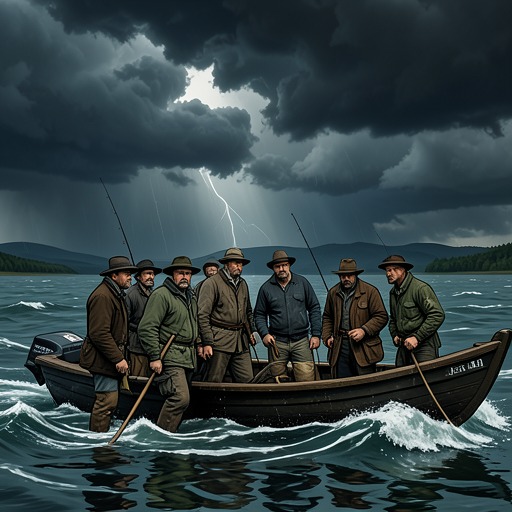
The play gives its mountain landscape a changing, unsettled character: rumbling and cracking sounds issue from among the mountains as cloud shadows pass across the scene. Elsewhere on the lake, the south wind rises and the water swells. During the voyage associated with Great Axenberg, a boy reports that the vessel has cleared Buggisgrat, only for a blast rebounding from the Devil’s Minster to drive it back toward the Great Axenberg. The wind reverses the boat’s progress and turns the surrounding terrain into an immediate danger.
Tell’s Maneuver
Tell recalls that the viceroy, Rudolph der Harras, and their retinue were aboard, while his bow and quiver lay astern beside the helm. He tells the crew to exert themselves until they reach the shelving crag, reasoning that the danger will then be past. As they near the point, he prays for God’s help and strains to bring the vessel’s stern close to the rocky wall; he then takes up his weapons. Great Axenberg is thus the fixed feature around which the action tightens: Tell’s maneuver depends on bringing the boat close to a shore whose steepness has already made it seem almost impossible to reach.
Narrative Significance
Great Axenberg marks the force of the natural conditions governing the voyage. The storm drives the vessel toward the crag, while the rock face limits where it can go and shapes Tell’s response. The location’s dramatic importance lies in this pressure between movement and obstruction: the same dangerous shore that threatens the boat provides the point at which Tell can act.